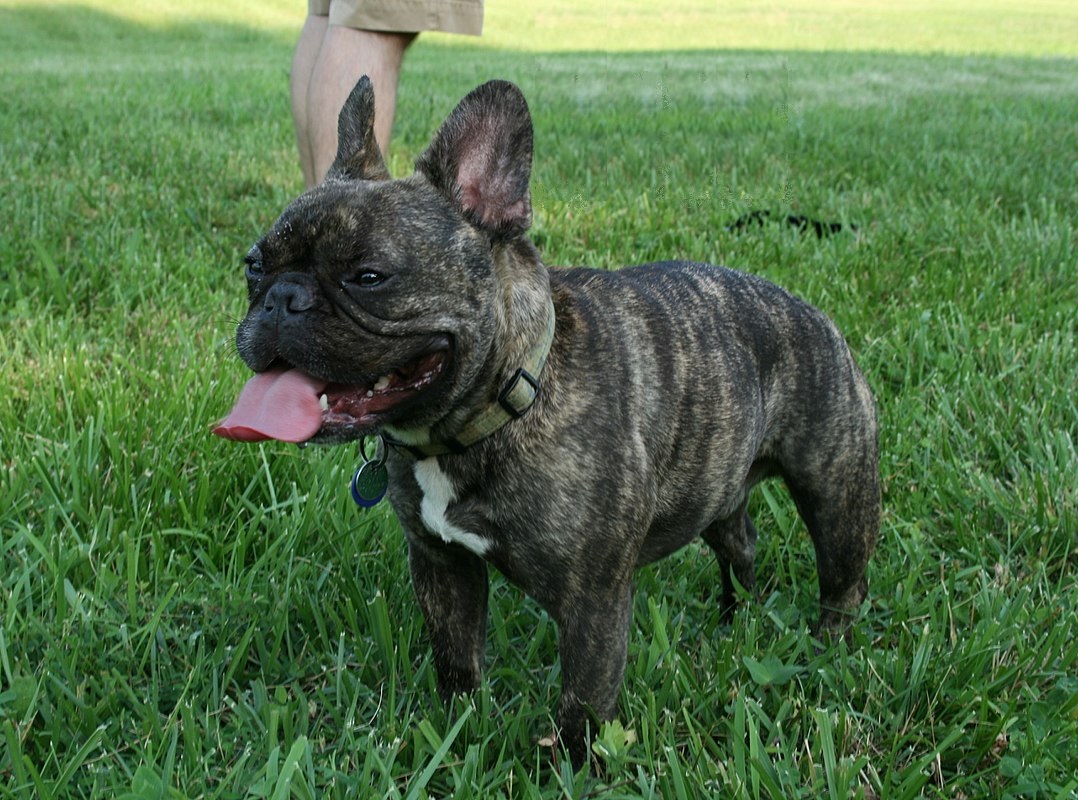
French Bulldogs have become one of the most popular dog breeds in the United States, prized for their compact size and big personality. They're also a brachycephalic (flat-faced) breed, which means their most important health consideration — breathing — is built into their anatomy rather than being an occasional risk. This guide covers what the American Kennel Club (AKC) and the French Bull Dog Club of America say about temperament and care, what veterinary sources say about brachycephalic airway risk, and what a French Bulldog realistically costs to buy and keep in the U.S.
Veterinary disclaimer. This article is general, informational content. It doesn't diagnose your pet's condition and doesn't replace an in-person veterinary exam. See the full Veterinary Disclaimer.
Quick Facts
| Trait | Typical range |
|---|---|
| AKC group | Non-Sporting Group |
| Height | 11–13 inches |
| Weight | Under 28 lbs |
| Life expectancy | 10–12 years |
| Coat | Short, low-shedding |
| Energy level | Moderate, but exercise tolerance is limited by anatomy |
| Good with children | Generally yes, with normal supervision |
| Grooming frequency | Weekly coat brushing; frequent facial-fold cleaning |
Sources: American Kennel Club, PetMD.
Temperament: What French Bulldogs Are Actually Like
Based on the AKC breed page and information published by the French Bull Dog Club of America, French Bulldogs are typically described as playful, adaptable, and affectionate, with an even, easygoing disposition that has made them especially popular with city and apartment dwellers. Veterinary-reviewed breed sources describe them as generally sociable with people and other pets once socialized, though individual dogs can be reserved with unfamiliar situations at first. They tend to enjoy being the center of attention and are often described as comedic, low-key companions rather than high-drive working dogs.
Exercise Needs
This is a breed where "exercise needs" and "exercise limits" have to be discussed together. French Bulldogs have moderate energy but limited exercise tolerance because of their airway anatomy (see the health section below). Based on veterinary guidance:
- Short walks — commonly cited around 15 minutes — are typically sufficient for daily physical and mental stimulation
- Strenuous exercise, long walks, and any activity in hot or humid weather should be avoided or closely monitored, because brachycephalic dogs cool themselves less efficiently through panting
- Signs of overexertion (loud or labored breathing, blue-tinged gums, collapse) are a reason to stop activity immediately and, if severe, seek emergency veterinary care
This is not a breed to take on long hikes or intense summer exercise sessions, regardless of how enthusiastic it seems in the moment.
Grooming Needs
French Bulldogs have a short, low-shedding coat, which simplifies brushing, but their flat face and skin folds require dedicated attention:
- Weekly brushing is generally enough for the coat itself
- Facial wrinkles and skin folds need regular cleaning and thorough drying to prevent bacterial or yeast infections, since moisture trapped in folds is a common irritation site
- Ears should be checked and cleaned regularly
- Bathing roughly every one to two months (or more often for dogs with skin allergies) is commonly recommended by veterinary sources
Health: Brachycephalic Airway Risk and Other Concerns
Veterinary disclaimer: The following is general information, not a diagnosis or a personalized treatment recommendation. If your dog is showing labored breathing, exhaustion after minimal activity, or fainting, treat this as an emergency and contact a veterinarian or emergency veterinary service immediately — don't wait to look it up online first.
The single most important health fact about French Bulldogs is that they are a brachycephalic breed, and brachycephalic obstructive airway syndrome (BOAS) is a well-documented condition in the veterinary literature, not a rare complication. According to veterinary hospital sources including VCA Animal Hospitals and the University of Florida College of Veterinary Medicine, BOAS in flat-faced breeds — including French and English Bulldogs, Pugs, Boston Terriers, and others — stems from one or more structural airway abnormalities that are common in these breeds:
- Stenotic nares — abnormally narrow nostrils that restrict airflow
- Elongated soft palate — soft tissue that partially blocks the airway
- Everted laryngeal saccules and, in more advanced or chronic cases, laryngeal collapse
- Hypoplastic trachea — a narrower-than-normal windpipe in some individuals
Reported symptoms include noisy breathing, snoring, snorting when excited, reduced tolerance for exercise and heat, and in severe cases, fainting or collapse. Veterinary sources note that conservative management (weight control, exercise restriction, air conditioning in hot weather) can help manage mild cases, but that surgical correction is often described as the treatment of choice when anatomical abnormalities are meaningfully interfering with a dog's breathing — and that outcomes tend to be better when surgery is performed earlier rather than after years of chronic strain on the airway.
Practical implications for a prospective owner: budget for the possibility of BOAS-related veterinary evaluation or surgery, ask breeders about the parents' breathing and any airway surgery in the line, avoid over-exercising or exposing the dog to heat and humidity, and treat air travel (especially in cargo holds) with real caution, since brachycephalic breeds are considered higher-risk for heat and stress-related breathing complications in several airline pet policies.
Other health considerations noted by veterinary sources include:
- Skin allergies and sensitive skin, often linked to the same fold-related moisture issues mentioned in grooming
- Ear infections
- Spinal and back issues, including intervertebral disc disease, which is more common in some short-legged, compact breeds
- Reproductive complications: French Bulldogs frequently require Caesarean section for whelping due to puppy head size relative to the dam's pelvis — a fact relevant mainly to breeders, but worth knowing as context for the breed's overall health profile
How Much Does a French Bulldog Cost? (U.S. Estimates)
Note on prices: All figures are U.S. estimates for general planning. Prices and availability can change, and French Bulldog pricing in particular varies enormously by color, lineage, and breeder — treat these as ranges, not quotes.
Purchase or adoption
French Bulldogs are among the more expensive popular breeds to buy from a breeder. U.S. pricing guides commonly cite a wide range — roughly $1,500 to $10,000 or more — driven heavily by coat color/pattern trends, health testing of the parents, and breeder reputation; rare colors can command a significant premium. Adoption through a rescue (including breed-specific French Bulldog rescues) is typically much less expensive, though French Bulldogs are less commonly available through general shelters than some other breeds.
First-year and ongoing costs
Because French Bulldogs are a small breed, food costs tend to run lower than for a large dog. However, this is offset by higher veterinary costs tied to brachycephalic-related care, skin-fold maintenance, and the possibility of airway surgery — and by insurance premiums that run higher than average for the breed specifically (see below), not just "higher end of a generic range." The cost summary below adjusts the general U.S. dog-ownership baseline in both directions for this breed rather than reusing a large-breed estimate unchanged.
Pet insurance
Average U.S. accident-and-illness pet insurance premiums for dogs are commonly reported around $70 per month, per recent U.S. insurance-cost research; brachycephalic breeds can sometimes see higher quoted premiums or specific exclusions related to airway surgery depending on the insurer, so it's worth reading policy details (not just the headline price) before choosing a plan.
Cost summary table
| Cost category | Typical U.S. range (estimate) |
|---|---|
| Purchase price (breeder) | ~$1,500–$10,000+ |
| Adoption fee (breed rescue, when available) | Typically lower than breeder price; varies by organization |
| First-year total (incl. supplies, vet, spay/neuter) | ~$800–$5,000+ (lower food/supply costs than a large breed, offset by a higher chance of breed-specific veterinary or surgical costs) |
| Ongoing annual cost thereafter | ~$900–$5,200+ (same offsetting effect: smaller food bill, larger plausible vet bill) |
| Pet insurance (monthly, average) | ~$85–$94/month — notably higher than the roughly $70/month average for dogs generally, per Forbes Advisor's 2026 breed-level data |
Prices and availability can change. These are U.S. estimates intended for planning, not fixed prices.
Is a French Bulldog Right for You?
A French Bulldog can be a strong fit for someone in an apartment or smaller home who wants an affectionate, low-shedding companion and doesn't need a high-endurance exercise partner — but only if that person is genuinely prepared for brachycephalic-specific care: avoiding heat and overexertion, monitoring breathing, and budgeting for the real possibility of airway-related veterinary costs. It's a weaker fit for an active household planning long hikes, frequent air travel, or a hot climate without reliable air conditioning.
Frequently Asked Questions
Why do French Bulldogs have breathing problems? Because they're a brachycephalic (flat-faced) breed, their skull shape is associated with structural airway features — such as narrow nostrils and an elongated soft palate — that can restrict airflow. Veterinary sources describe this collectively as brachycephalic obstructive airway syndrome (BOAS). Not every French Bulldog is severely affected, but the anatomical risk is a breed-wide characteristic, not an unusual complication.
Can French Bulldogs go for long walks or runs? Generally no — veterinary and breed guidance recommends short walks and avoiding strenuous exercise or hot weather, given the breed's limited ability to cool itself efficiently through panting.
Are French Bulldogs good apartment dogs? Their small size and generally moderate energy make them a common choice for apartment living, though their grooming (skin folds), heat sensitivity, and vocal tendencies (snoring, grunting) are worth knowing about in advance.
Is a French Bulldog's breathing issue something a vet can fix? Veterinary sources describe surgical correction of specific airway abnormalities as a treatment option in cases where anatomy is meaningfully interfering with breathing, with outcomes generally better when addressed earlier. Whether surgery is appropriate for an individual dog is a decision for a veterinarian who has examined that dog, not something this article can determine.
Sources
- American Kennel Club — French Bulldog
- PetMD — French Bulldog Dog Breed Health and Care
- Forbes Advisor — Average Cost of Pet Insurance
Sources verified during editorial review, September 2026.