A crate, used correctly, is one of the most useful tools for house-training a puppy, keeping it safe when unsupervised, and giving it a den-like space of its own. Used incorrectly — as a punishment, or for stretches of time the puppy's body genuinely can't handle — it can create anxiety and set training back. This guide walks through a realistic, step-by-step process, plus a timeline for how long a puppy can reasonably stay crated at each age, and what to avoid along the way.
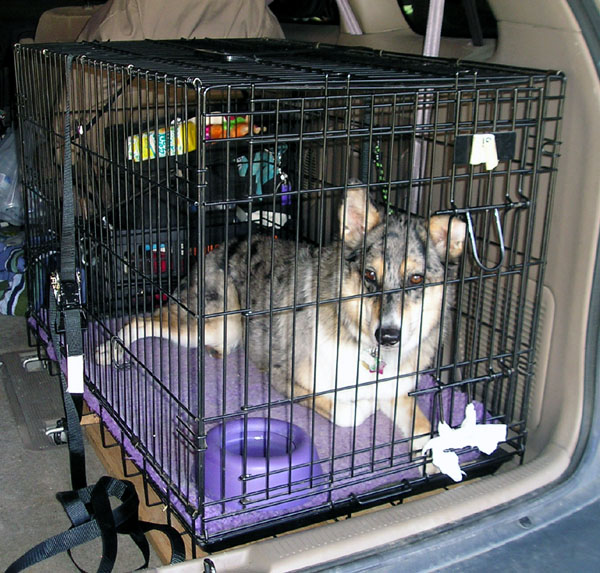
Before You Start: Choosing the Right Crate
- Size matters. A puppy's crate should be large enough for it to stand up, turn around, and lie down comfortably — but not so large that it can use one end as a bathroom and still have room to sleep away from it. Many wire crates come with dividers so you can adjust the space as a puppy grows, rather than buying a new crate every few months.
- Type. Wire crates, plastic/travel crates, and soft-sided mesh crates are all commonly used; wire crates tend to offer the best airflow and visibility, which can help a puppy feel less isolated early on.
- Location. Place the crate in a common family area at first — a living room or bedroom — rather than an isolated basement or laundry room, so the puppy doesn't associate it with being cut off from the family.
Step-by-Step Crate Training Process
Step 1: Make the crate a good place to be
Add a comfortable blanket or bed, a safe chew toy, and something with your scent on it. Leave the door open and let the puppy investigate on its own terms. Don't force or push a puppy into the crate — the goal at this stage is simply curiosity, not compliance.
Step 2: Build positive associations with food
Scatter a few treats near the crate entrance, then just inside it, encouraging the puppy to walk in voluntarily. Once the puppy is comfortable stepping inside to get treats, start feeding regular meals just inside the crate, gradually moving the bowl farther back over several days, still with the door open.
Step 3: Add a verbal cue
Once the puppy is entering the crate on its own for food or toys, start pairing that action with a consistent word or phrase, such as "kennel up" or "crate." Say it as the puppy walks in, and reward it once inside. Over time this cue alone will prompt the puppy to enter.
Step 4: Practice short closed-door periods while you're present
With the puppy calm and relaxed inside the crate, close the door for a few minutes while you stay in the room. Offer a stuffed chew toy to keep the puppy occupied. Let the puppy out while it's calm — not the instant it starts whining, if you can help it, since letting a puppy out specifically when it's fussing can accidentally reward that fussing.
Step 5: Gradually extend duration and step out of the room
Slowly increase how long the door stays closed, and start leaving the room for a few minutes before coming back and letting the puppy out calmly. Increase both the duration and your distance/absence gradually across several days — this is not a one-day process.
Step 6: Build up to real absences
Once the puppy can settle for 30–60 minutes with you out of sight, start practicing short actual departures from the house — a quick errand, then longer outings — always pairing crate time with a chew toy or safe enrichment item and making sure the puppy has had a chance to relieve itself and get some exercise first.
Crate Time Guidelines by Age
A tired, recently-exercised, recently-toileted puppy handles crate time far better than one that's wound up or needs a bathroom break. As a general (not absolute) guideline for daytime crate stretches:
| Puppy age | Approximate maximum crate time |
|---|---|
| 9–10 weeks | 30–60 minutes |
| 11–14 weeks | 1–3 hours |
| 15–16 weeks | 3–4 hours |
| 17+ weeks | 4–6 hours |
A commonly cited rule of thumb is roughly one hour of daytime crate time for each month of age, up to a reasonable adult maximum — but this is a general guideline, not a fixed rule for every puppy, and it applies to daytime confinement, not overnight sleep (most puppies can sleep through longer stretches overnight once house-training is progressing, since they're less active). No puppy should be crated for a full workday with no breaks; if your schedule requires long absences, plan for a midday break from a family member, neighbor, or dog walker, particularly during the youngest weeks.
What to Avoid
- Never use the crate as punishment. If a puppy learns to associate the crate with being in trouble, it will resist going in even when you need it to rest calmly.
- Don't force a puppy into the crate by physically pushing or dragging it in — this builds resistance instead of reducing it.
- Don't let a puppy out the instant it whines, if you can safely wait a short beat for a pause in the noise first — otherwise the puppy can learn that whining gets the door open. (This does not apply to genuine distress, a full bladder, or a puppy that needs to go outside — always rule those out first.)
- Don't skip exercise and a bathroom break before crating. A puppy that's full of pent-up energy or needs to relieve itself will struggle regardless of how well the crate itself is set up.
- Don't leave collars, leashes, or anything a puppy could chew and swallow inside an unsupervised crate, and remove any items that pose a choking or entanglement risk.
- Don't jump straight to long absences. Skipping the gradual buildup is one of the most common reasons crate training doesn't go smoothly — the process above is designed to happen over days to weeks, not hours.
A Realistic Timeline
Most puppies can be reasonably comfortable with short, closed-door crate periods within the first week of consistent practice, and ready for longer real-world absences (several hours) somewhere between 4 and 5 months old, assuming the gradual process above is followed and the puppy is getting adequate exercise and bathroom breaks. Some puppies progress faster, and some — especially more anxious individuals or those with a difficult history — need considerably longer. If a puppy shows signs of significant distress (persistent panicked barking, self-injury attempts, drooling, or destructive attempts to escape the crate) rather than ordinary protest whining, this can be a sign of separation anxiety or crate-specific distress that benefits from slowing down the process significantly or consulting a professional trainer or veterinary behaviorist rather than pushing through.
Sources
- ASPCA Pet Health Insurance — How to Crate Train a Puppy
- Animal Humane Society — Crate training your dog or puppy
- San Francisco SPCA — Crate Training Puppy
Sources verified during editorial review, September 2026.