Traveling with a dog or cat means dealing with two separate sets of rules that don't always overlap: what a government agency actually requires, and what your specific airline requires on top of that. Confusing the two is one of the most common ways a trip goes wrong — assuming a health certificate satisfies an airline's carrier and fee rules, or that an airline's booking confirmation means a state or country will accept your paperwork at the border.
Veterinary disclaimer. This article is general, informational content. It doesn't diagnose your pet's condition and doesn't replace an in-person veterinary exam. See the full Veterinary Disclaimer.
What the Federal Government Actually Regulates
It's worth starting here because it surprises a lot of first-time pet travelers: the U.S. Department of Agriculture's Animal and Plant Health Inspection Service (APHIS) does not set a single national rulebook for moving a pet from one U.S. state to another. APHIS is explicit on this point: "USDA APHIS does not endorse health certificates for the movement of pets across State or Territorial lines." Interstate requirements — whether a health certificate is needed at all, and how recently it must have been issued — are set individually by the destination state or territory, including Hawaii, Guam, Puerto Rico, and the U.S. Virgin Islands. In practice, that means the right first step for a road trip isn't checking a federal website — it's checking the destination state's animal health or agriculture department for its current entry requirements, since these do vary and do change.
International travel is where APHIS's role is real and central. There's no single global "pet passport" — instead, APHIS explains, "we issue health certificates that confirm your pet meets the unique requirements of your destination country," and each country sets its own rules on vaccinations, testing, and timing. Because those requirements differ so much by destination, and because the paperwork has to be completed by a veterinarian accredited by USDA to issue and, when required, have that certificate endorsed by APHIS, the agency's own guidance is to start early: the process "could take a few weeks to many months, depending on the destination country's requirements." Contacting a USDA-accredited veterinarian as soon as international travel is even a possibility — not the week before you fly — is the single most useful piece of practical advice in APHIS's guidance.
Bringing a Dog Back Into the United States
If part of your trip involves bringing a dog back into the U.S. from abroad, a separate federal requirement applies on the return leg: the Centers for Disease Control and Prevention (CDC), not APHIS, sets the rules for dogs entering the country. The CDC's current guidance ties requirements to where the dog has actually been: "Requirements are based on your dog's situation including whether it has been to a high-risk country for dog rabies in the last six months and where it was vaccinated." The CDC is direct about the consequence of skipping this: a dog that hasn't been vaccinated against rabies and has visited a high-risk country in the past six months "will NOT be allowed to enter the U.S." The CDC publishes an online tool (its "Dog Importation Navigator") to work out exactly which documents apply to a specific dog's travel history — worth running through well before departure, since the requirements differ depending on whether the vaccination happened in the U.S. or abroad.
Flying With a Dog or Cat in the Cabin
Airline pet policies sit on top of all of the above, and they're set independently by each airline — meeting a state's or country's entry requirements doesn't automatically mean a specific flight will accept your pet. A handful of things are common across most major U.S. carriers for small dogs and cats traveling in the cabin, based on each airline's currently published policy: the pet must ride in an approved carrier that fits completely under the seat in front of you, generally for the entire flight; there's a per-direction fee, typically in the roughly $100–$200 range depending on the airline and route; only a limited number of pets are allowed in the cabin per flight, so booking the pet's spot as early as possible matters; and pets generally aren't permitted in premium cabins, bulkhead rows, or exit rows.
Carrier dimensions and fees vary by airline and do change, so treat the figures below as a starting point for comparison rather than a number to book against — always confirm current pricing and size limits directly with the airline before you fly.
| Airline | Soft-carrier size (approx.) | In-cabin fee (domestic, one way) | Source verified |
|---|---|---|---|
| Delta Air Lines | 18" × 11" × 11" (recommended max) | $150 (U.S./Canada/Caribbean) | Delta's official pet travel pages |
| American Airlines | 18" × 11" × 11" | $150 | Third-party airline-policy aggregators (Chewy, BringFido), cross-checked |
| United Airlines | 18" × 11" × 11" | $150 | Third-party airline-policy aggregators, cross-checked |
| Southwest Airlines | 18.5" × 13.5" × 9.5" | $125 | Third-party airline-policy aggregators, cross-checked |
| Alaska Airlines | 17" × 11" × 9.5" | $100 | Third-party airline-policy aggregators, cross-checked |
Delta's own pet travel pages, which we accessed directly, add useful specifics: pets must be at least 8 weeks old for domestic travel, carriers need ventilation on three sides for domestic flights (four sides for international), and Delta caps how many pets are allowed per cabin — for example, no more than two in Delta First on domestic flights and none at all in Delta One or other business-class cabins. Several countries and U.S. destinations, including Hawaii, Australia, New Zealand, the United Kingdom, and Brazil among others, don't permit pets in the cabin at all on Delta, which is a useful reminder that a destination can override an airline's general in-cabin policy entirely — check both.
A pattern that shows up across multiple airlines' published policies, including American's, is a restriction on brachycephalic (flat-faced) breeds — bulldogs, pugs, Boston terriers, and boxers among dogs; Persians, Himalayans, and exotic shorthairs among cats — from traveling as checked cargo, reflecting the documented higher risk these breeds face with breathing and heat stress. That restriction is generally about cargo, not the cabin, but if you're weighing whether a brachycephalic pet should fly at all, it's worth a direct conversation with your vet about the specific risk for your dog or cat rather than assuming cabin travel carries the same risk profile as cargo.
If Your Pet Needs to Travel as Checked Cargo
Larger dogs that can't fit in an under-seat carrier typically travel as checked cargo through a dedicated program — American's PetEmbark program, for instance, allows dogs and cats up to roughly 100 lbs including the carrier, in hard-sided kennels within specified maximum dimensions, at a materially higher fee than in-cabin travel. Cargo programs are also where seasonal temperature embargoes usually apply — airlines commonly won't check pets during extreme heat or cold at the departure, connecting, or arrival airport, for the animal's safety. If your pet is a candidate for cargo travel, budget extra lead time to confirm your specific airline's current weight limits, kennel specifications, and any seasonal restrictions well before booking, since these details are among the most likely to change and the least forgiving if missed.
Health Certificates: Timing Matters More Than People Expect
A veterinary health certificate — sometimes called a Certificate of Veterinary Inspection — generally has to be issued close to your actual travel date, not weeks in advance, because both destination states and destination countries typically set a validity window measured from the exam date. Since that window is set by the destination, not by federal rule, the only reliable way to get the exact number of days is to ask your veterinarian's office once you know your travel dates and destination — and to schedule the appointment accordingly, rather than getting the certificate done early "to get it out of the way" and risking it expiring before you actually travel.
Road Trips: What Federal and Airline Rules Don't Cover
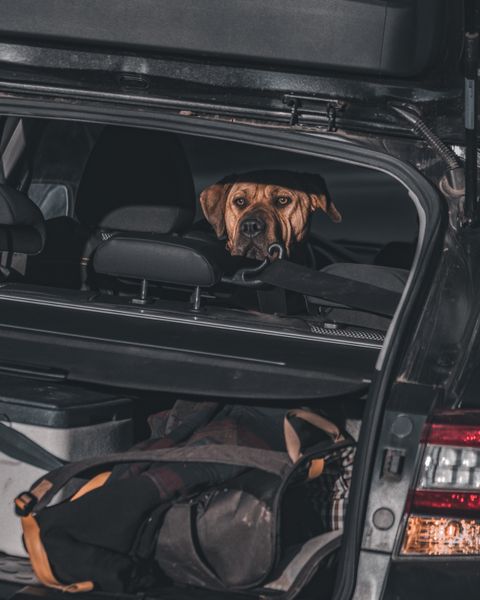
None of the above — APHIS, CDC, or airline policy — governs how a pet actually rides in a car, so that part is on you. A few practical basics that most veterinary and animal-welfare sources agree on: secure dogs and cats in a crate, carrier, or a crash-tested harness rather than loose in the car, both for safety in a sudden stop and to prevent a startled pet from interfering with driving; plan water and bathroom breaks roughly every 2–4 hours on longer drives; never leave a pet alone in a parked car, since interior temperatures can climb dangerously within minutes even on a mild day; and make sure your pet is wearing current ID and is microchipped with up-to-date contact information before you leave, since a pet that slips out at a rest stop in an unfamiliar state is a genuinely common way trips go badly. If your dog is still a puppy working out its crate routine before a first road trip, our guide to essential gear for a new puppy covers choosing a crate that will actually hold up to travel use, not just home use.
When Not Traveling With Your Pet Is the Better Option
None of this is a case for always bringing your pet along. A long flight in cargo, a multi-leg road trip, or a destination with no pet-friendly lodging can be harder on an animal than staying home with a sitter or a boarding facility — particularly for an anxious pet, a very young or senior animal, or a pet with an existing health condition your vet has flagged as a travel risk. If you're weighing that trade-off, our guide on what pet boarding actually costs can help you compare that option against the fees and logistics of bringing your pet along.
A Reasonable Planning Timeline
- As soon as you're considering the trip: confirm whether you're crossing state or country lines, and if international, contact a USDA-accredited veterinarian immediately given how long that process can take.
- 4–8+ weeks out (international, or if your airline requires advance pet reservations): book your pet's cabin or cargo spot, since space is limited and fills up; confirm carrier dimensions against your specific aircraft type where the airline allows it.
- 1–2 weeks out: confirm your destination's exact interstate or import requirements directly with the state or country's official source, since third-party summaries (including this article) can lag behind real policy changes.
- Days before travel, per your vet's guidance on timing: get the health certificate issued within whatever validity window your destination requires.
Sources
- USDA APHIS — Pet Travel: Domestic and International Travel With a Pet
- USDA APHIS — Frequently Asked Questions About Traveling With Your Pet
- CDC — Bringing a Dog Into the United States
- Delta Air Lines — Pet Travel Overview
- Chewy — Complete Airline Pet Policy Guide for All U.S. Airlines
- BringFido — American Airlines Pet Travel Policy
Sources verified during editorial review, September 2026. Airline carrier dimensions and fees change; confirm current details directly with your airline before booking.