Brushing is widely considered the single most effective thing you can do at home to slow plaque buildup between professional cleanings — but the technique matters as much as the intention. Going too fast, using the wrong toothpaste, or wrestling a squirming cat can undo the benefit, or simply teach your pet to dread the whole routine. This guide covers the practical mechanics: how often to brush, what to actually put on the brush, how to introduce it gradually, and how to recognize when a dog or cat genuinely isn't tolerating it. For the bigger picture on why dental disease matters and what professional care costs, see our companion guide, Dog Dental Care: Prevention and Cost — this article focuses only on the hands-on technique, for both dogs and cats.
A quick note before you start: this is general how-to information, not a substitute for an in-person veterinary exam. If your dog or cat already has visibly red or bleeding gums, loose teeth, or seems to be in pain around the mouth, talk to your veterinarian before starting a home brushing routine rather than pushing ahead — see our full Veterinary Disclaimer for what that means.
What Brushing Does — and Doesn't — Replace
Home brushing removes soft plaque from the visible surfaces of the teeth before it hardens into tartar. What it can't do is reach below the gumline, which is where periodontal disease actually develops. Describing what happens during a professional cleaning, the American Veterinary Dental College's pet-education site notes that a proper cleaning includes a full oral exam, dental radiographs to check for problems beneath the gumline, and "a full cleaning under the gum-line where periodontal disease lurks" — something that can't be done on an awake animal. In other words, brushing is prevention and maintenance, not a substitute for the periodic professional exams and cleanings a veterinarian recommends. If you haven't already, our companion article on dog dental care, prevention, and cost covers that side of the picture — what a professional cleaning involves, roughly what it costs, and how prevention fits into a dog's overall care — and isn't repeated here.
How Often to Brush
The American Veterinary Medical Association puts it plainly: "Regularly brushing your pet's teeth is the single most effective thing you can do to keep their teeth healthy between dental cleanings," and daily brushing is best, though "brushing several times a week can be effective" when daily isn't realistic. The Veterinary Oral Health Council (VOHC), whose standardized brushing techniques are recommended for clinical use by the AVDC, is a little more specific about where to focus: plaque and tartar accumulate fastest on the buccal — outer, cheek-side — surfaces of the upper teeth, so those surfaces deserve the most attention if a full session isn't possible.
Realistically, not every dog or cat will sit still for a complete, textbook brushing every day, and that's fine. The VOHC's own guidance acknowledges that "some dogs and cats will not cooperate with daily brushing, and may not tolerate the full … brushing sequence," and states the more useful principle plainly: any brushing done regularly is better than no brushing at all. Consistency, even an imperfect version of it, beats an occasional perfect session.
What to Use — and Why Human Toothpaste Is Off the List
Use a toothpaste made specifically for dogs or cats, applied with a soft pet toothbrush, a finger brush, or a clean piece of gauze wrapped around your finger if your pet won't accept a brush yet. Never use human toothpaste. Pets don't rinse and spit the way people do — they swallow whatever is on the brush — and human toothpaste is formulated around that assumption in ways that don't translate safely to animals. Fluoride, standard in most human toothpaste, is meant to be used in small amounts and expectorated, not swallowed repeatedly by a much smaller animal. Some human toothpaste also contains the sweetener xylitol, which the U.S. Food and Drug Administration warns can cause a dangerous drop in a dog's blood sugar and, later, liver damage. Pet-specific toothpaste is designed to be safely swallowed and typically comes in flavors — poultry, malt, seafood — meant to make the process more tolerable rather than something to rinse out.
Ask your veterinarian which brush size and toothpaste make sense for your specific dog or cat, and whether any additional dental product on the market is worth adding — as the AVMA notes, not all marketed dental products are actually effective, so it's worth checking rather than assuming.
Introducing Brushing Gradually
Pets that are handed a toothbrush cold, with no lead-up, are the ones most likely to fight it every time afterward. A gradual introduction — spread over days or a couple of weeks, not forced into one sitting — tends to go far better long-term:
- Let them taste the toothpaste first, with no brush at all. Put a small amount on your finger and let your dog or cat lick it off, for a few days, so the flavor becomes something they associate with a treat rather than a threat.
- Get them used to your finger near and inside their mouth. Gently lift the lip and touch a few teeth and gums with a bare or gauze-wrapped finger for a few seconds, rewarding calm behavior before moving on.
- Introduce the brush itself without toothpaste. Let your pet see and sniff it, then touch it briefly to a few teeth, keeping the first sessions very short.
- Combine brush and toothpaste on just the front, outer teeth for a few seconds at a time, building duration gradually rather than attempting a full mouth on day one.
- Extend to the back teeth over subsequent sessions, prioritizing the outer surfaces of the upper teeth as noted above, and end every session on a calm, positive note — even if it was brief.
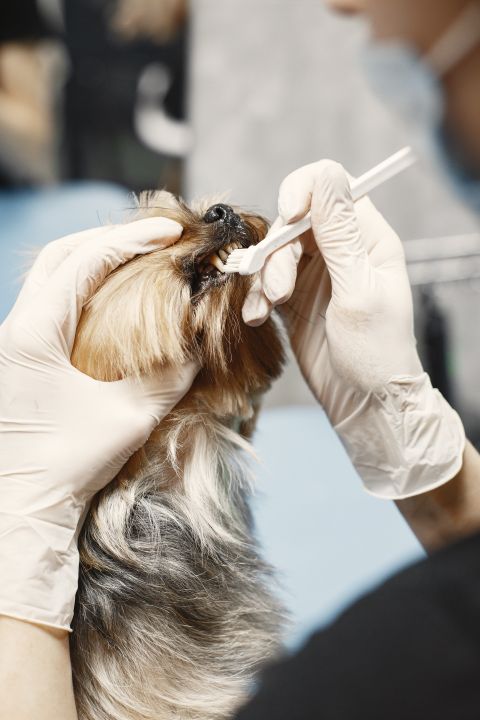
During each session, support your pet's head gently and lift the lip rather than prying the jaw open — you're brushing along the gumline of teeth that are already exposed when the lip is lifted, not forcing the mouth wide. Small, gentle strokes along the gumline are more useful than pressure or speed. Keep early sessions to well under a minute; length can grow as your pet gets more comfortable.
Cats vs. Dogs: What to Expect Differently
The AVMA notes a real behavioral difference between the two: "Most dogs accept brushing, but cats can be a bit more resistant — patience and training are important." In practice, that usually means moving even more slowly with a cat — spending longer on the taste-testing and finger-touch stages before a brush ever appears, accepting a shorter session or fewer teeth covered if that's genuinely what a particular cat will allow, and relying more on a finger brush or gauze if a bristled brush is a non-starter. A shorter, tolerated session most days beats a longer one that turns into a wrestling match.
Signs Your Dog or Cat Isn't Tolerating Brushing
Some initial wiggling or mild avoidance during the first few introduction steps is normal and usually settles with repetition. Genuine intolerance looks different, and is worth stopping for rather than pushing through:
- Repeated, escalating attempts to pull away or leave, rather than settling after a few seconds.
- Growling, hissing, or snapping/biting attempts — a clear communication that the interaction has crossed a line for that animal.
- Pawing at the mouth, drooling well beyond what's normal for them, or flinching and yelping when a particular area is touched, which can indicate pain rather than simple dislike of the process.
- Hiding, freezing, or trying to bolt as soon as the toothbrush or toothpaste tube appears, suggesting the association has already turned negative.
If you see the pain-related signs specifically — flinching, yelping, or resistance concentrated around one area of the mouth — that's a reason to see your veterinarian rather than simply brush more gently, since it may point to existing dental disease rather than a training problem. If it's more general resistance, back up a step or two in the introduction sequence, keep sessions shorter, and don't force it: a fearful, forced brushing session is worse for the relationship than skipping a day. Your veterinarian can also suggest realistic alternatives or additions — dental-specific diets or chews, water additives, or more frequent professional cleanings — for pets who never fully accept a toothbrush; our guide to dog dental care, prevention, and cost covers that range of options in more depth. Regular dental care of this kind is also just one part of a broader routine — see our adult dog care guide or adult and senior cat care guide for how it fits alongside diet, exercise, and checkups at different life stages.
When to Call Your Vet Instead of Just Brushing More
Brushing is prevention, not treatment. If you notice persistent bad breath, visibly red or swollen gums, loose or discolored teeth, reluctance to chew or eat, or pawing at the face, that's a reason for a veterinary exam rather than a more aggressive brushing routine — home care can't fix a problem that already exists below the gumline. Our guides to common signs of illness in dogs and common signs of illness in cats cover the broader picture of when a symptom warrants a visit, and how much does a vet visit cost can help you plan for that appointment.
Teeth aren't the only at-home grooming task worth getting comfortable with — regular nail trims prevent overgrown nails from splitting or affecting gait; see our comparison of dog and cat nail clippers and grinders for tools that make it easier.
Sources
- American Veterinary Dental College — What Is a Professional Veterinary Dental Cleaning?
- Veterinary Oral Health Council — Brushing (AVDC-endorsed brushing technique)
- American Veterinary Medical Association — Pet Dental Care
- U.S. Food and Drug Administration — Paws Off Xylitol; It's Dangerous for Dogs
Sources verified during editorial review, September 2026.