Scratching isn't misbehavior — it's a normal, instinctive cat behavior, which is exactly why it can't simply be trained away with punishment. According to Cornell University's Feline Health Center, scratching is "largely a marking behavior that deposits scent from special glands on the cat's paws into his territory," and it also serves a physical purpose: removing the worn outer sheath from the claws. Because it's instinctive — similar to grooming — it can't be eliminated, only redirected toward something more appropriate than your couch.
Veterinary disclaimer. This article is general, informational content. It doesn't diagnose your pet's condition and doesn't replace an in-person veterinary exam. See the full Veterinary Disclaimer.
The good news is that redirection genuinely works for most cats when it's done thoughtfully. Here's a research-based approach.
Step 1: Figure Out Your Cat's Scratching Preferences
Before buying anything, spend a few days observing what your cat is actually doing when it scratches furniture:
- Orientation: Does your cat stretch upward and scratch vertically (common on the sides of couches or door frames), or does it scratch horizontally (common on carpet or rugs)?
- Texture: Is your cat drawn to woven upholstery fabric, sisal-like texture, wood, or carpet?
- Location: Where does the scratching happen most — near a doorway, a favorite resting spot, or a specific piece of furniture?
Matching a scratching post or pad to these preferences dramatically increases the odds your cat will actually use it instead of the furniture.
Step 2: Provide the Right Scratching Surface
Based on your cat's preferences:
- If your cat scratches upholstered furniture, a sisal-rope-covered vertical post is usually the closest match in texture.
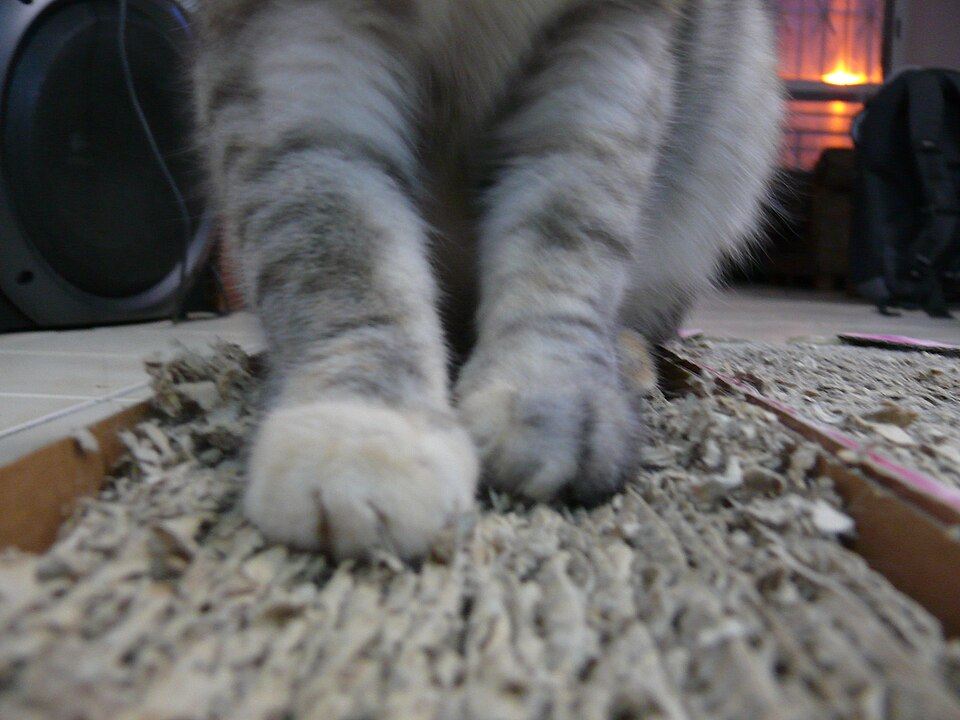
- If your cat scratches carpet or rugs, a carpet-covered post or a flat horizontal scratching pad tends to work better.
- Height and stability matter for vertical posts. A post needs to be tall enough for your cat to fully extend its body while stretching upward, and sturdy enough that it doesn't wobble or tip — an unstable post will often be abandoned in favor of furniture that doesn't move.
- Multiple cats or multiple rooms generally need multiple scratching surfaces — one post in a back bedroom won't help if the scratching problem is happening in the living room.
Step 3: Place It Where the Problem Is Happening
This is the step people most often get wrong: a scratching post placed in a low-traffic corner your cat never visits is unlikely to be used, no matter how nice it is. Cornell's guidance is to place new scratching posts directly next to the furniture or area your cat is currently scratching, then — only once your cat is reliably using it — gradually move it, a little at a time, to a more convenient permanent location.
Step 4: Make the Post More Appealing Than the Furniture
- Rub a small amount of catnip into the post, or use a catnip spray, to draw initial interest.
- Reward your cat with praise or a treat when you catch it scratching the post.
- Play with an interactive wand toy near the post to encourage your cat to engage with (and eventually scratch) it during play.
Step 5: Make the Furniture Temporarily Less Appealing
While your cat is learning to prefer the new post, it helps to make the furniture itself less rewarding to scratch:
- Cover the previously scratched area with a blanket, plastic sheeting, or double-sided tape (many cats dislike the sticky texture).
- Try a "booby trap" approach, such as a stack of lightweight plastic cups positioned to topple harmlessly if the cat jumps up to scratch — startling but not hurting the cat.
- Clean the area with an enzymatic odor eliminator, since lingering scent marks can draw your cat back to the same spot even after the visible scratch marks are gone.
- Consider a commercial scratching deterrent spray formulated for this purpose, applied according to the product's instructions.
These deterrents work best as a temporary bridge while the new scratching post takes hold — the long-term solution is giving your cat a scratching surface it prefers, not permanently defending furniture with tape and cups.
Step 6: Manage Claws Directly
- Regular nail trims reduce the damage scratching can cause, even if they don't stop the behavior itself. Trim only the sharp tip, avoiding the pink "quick," which contains blood vessels and nerves.
- Soft plastic nail caps are a non-surgical option some owners use, applied over trimmed nails and typically replaced every 6–12 weeks as the nail grows and sheds them.
What Not to Do
- Don't punish your cat for scratching. Cornell's guidance notes that punishment is largely ineffective for this behavior — cats don't reliably connect a delayed correction with the scratching that caused it, and punishment can damage your cat's trust in you or increase stress-related behavior instead of resolving the root problem.
- Don't rely on declawing as a solution. The American Veterinary Medical Association (AVMA) strongly discourages elective declawing (onychectomy) except when medically necessary, stating that scratching is "a normal behavior of cats that conditions the claws, serves as a visual and scent territorial marker, allows for self defense, and provides healthy muscle engagement through stretching," and that declawing "causes acute pain and may result in chronic pain, maladaptive behavior, disability, and significant mutilation." The AVMA specifically directs veterinarians to counsel owners on non-surgical alternatives — which is exactly what the steps above are meant to provide.
How Long Does It Take?
Most cats begin using an appropriately chosen, well-placed scratching post within a couple of weeks of consistent redirection, though this varies by individual cat, how strong the existing habit is, and how closely the new post matches the cat's actual preferences. If a cat continues to ignore every reasonable scratching alternative, or if scratching is suddenly paired with other behavior changes (increased irritability, litter box avoidance, or signs of pain when touched), it's worth discussing with a veterinarian, since sudden changes in a cat's behavior can sometimes have an underlying medical cause rather than a purely behavioral one.
Sources
- Cornell University Feline Health Center — Feline Behavior Problems: Destructive Behavior
- American Veterinary Medical Association — Declawing of Domestic Cats (policy)
Sources verified during editorial review, September 2026.