A reliable recall is less a single command than a habit you build over weeks: the dog learns that coming to you, every time, in every place, is the most rewarding option on offer. The American Kennel Club and other trainers who write about recall are consistent on one point — the goal isn't a dog that comes because it has no choice, it's a dog that comes because it wants to. That distinction changes almost everything about how the training should actually be done, from the first day indoors to the moment you eventually trust a dog off-leash in an open field.
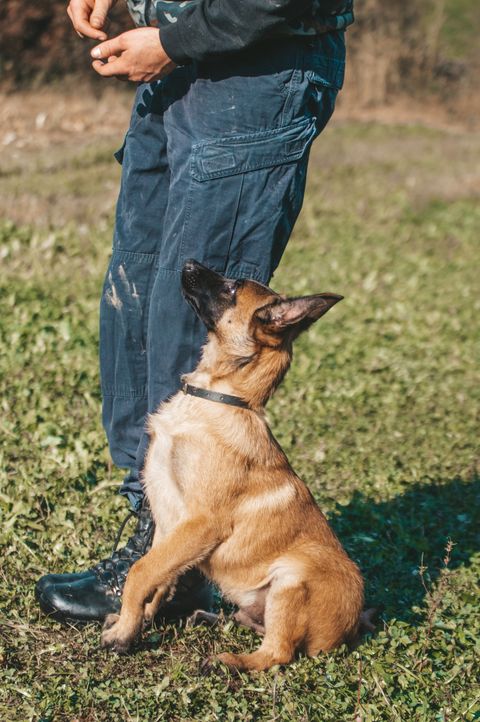
Start With What Counts as a Reward
Before teaching anything, figure out what your dog will work hardest for. Kibble rarely competes with a squirrel, another dog, or an interesting smell — so recall training generally uses "high-value" rewards: small pieces of real chicken, cheese, freeze-dried liver, or whatever your dog goes out of its way for, reserved specifically for recall practice so they stay special. For some dogs a favorite toy, a quick game of tug, or enthusiastic praise and physical affection works just as well or better. The point isn't the specific reward — it's that coming back has to consistently pay off better than whatever your dog was doing before you called.
Step 1: Build a Positive Association With the Cue
Before asking your dog to move toward you at all, spend a few sessions simply pairing your recall word with something wonderful. Say "come" (or whichever word you've chosen — some trainers prefer a fresh word over "come" if it's already been overused or nagged) in a warm, upbeat tone, then immediately deliver a high-value treat, regardless of what your dog is doing at that moment. Repeat this until your dog's ears perk up and its attention snaps to you the instant it hears the word. At this stage, the dog doesn't need to move a muscle — you're only building the association between the sound and something good happening.
This is also a good time to teach your dog its name means "look at me," separately from the recall word itself: say the name in an excited voice when your dog isn't looking at you, then mark and reward the instant it turns its head. A dog that reliably orients to its name gives you a second, earlier point of contact before you even ask for the full recall.
Step 2: Practice On-Leash, Indoors, Before You Ever Drop It
Start in a quiet room or hallway with your dog on a regular leash and no competing distractions. Say the cue once, then encourage your dog toward you — many trainers suggest backing away or jogging a few steps as you call, since motion and energy are naturally more exciting to a dog than standing still and repeating a word. When your dog reaches you, reward immediately and enthusiastically. A few short, upbeat sessions a day work better than one long one; you're aiming for a dog that responds instantly and cheerfully before distance or distractions are added to the mix.
If you're starting this with a young puppy, it fits naturally alongside the other foundational skills of the first months — our guide to crate training a puppy and puppy's first year, month by month cover the broader early-training timeline recall training slots into.
Step 3: Add Distance, Gradually
Once your dog is reliably coming from a few feet away indoors, increase distance in small increments — a few feet at a time, not room to yard in one jump. Keep your dog on a leash or long line during this phase so a missed recall never actually works out for the dog (more on why that matters below). Practice in a few different rooms of the house, then a fenced yard, before introducing any real-world distraction. Adding a "sit" once your dog arrives — rewarding it for settling in front of you rather than circling or dancing just out of reach — also makes the end of the recall calmer and gives you a moment to safely take hold of the collar without a chase.
Step 4: Introduce a Long Line
A long line — a lightweight leash typically 15 to 50 feet in length — is the standard tool for practicing recall at real distance before a dog has earned off-leash trust. It lets your dog range further and experience more realistic distractions while you retain the ability to prevent it from simply running off if a recall doesn't land. Trainers are consistent on how it should and shouldn't be used: the line isn't there to reel your dog in like a fish whenever it ignores you. Dragging a dog back to you after a failed recall doesn't teach it to come voluntarily, and can undercut the positive association you've spent weeks building. Instead, the line is a safety net — if your dog doesn't respond, you can calmly walk toward it, apply gentle pressure, or use the moment to reset and try again with a bigger reward or a shorter distance, rather than accidentally rehearsing the failure. Long-line practice is also the natural extension of general leash skills; if loose-leash walking itself is still a struggle, our guide to stopping a dog from pulling on leash is worth sorting out first, since a dog that fights the leash constantly gets less out of long-line recall sessions.
Step 5: Proof Around Distractions
"Proofing" means testing and rewarding the recall in the presence of things that compete for your dog's attention — and it should happen in careful stages, not all at once. Start small: call your dog while a family member walks by, while a toy sits on the floor, or while someone tosses a ball nearby. Only increase the difficulty once your dog is succeeding consistently at the current level. If a recall attempt fails, that's useful information, not a training failure to push through — it means the distraction was too strong or the reward wasn't compelling enough for that moment, so drop back to an easier version and raise the value of the reward before trying again.
Real-world distractions — another dog, wildlife, food on the ground, an open door — are usually far stronger than anything you can easily recreate in a yard, which is exactly why the long line stays attached through this whole stage. A dog that will reliably leave a toy to come to you hasn't necessarily proven it will leave a rabbit; each new category of distraction generally needs its own round of practice before you can trust it under pressure.
What Not to Do
A handful of habits reliably damage a recall, sometimes permanently:
- Never punish a dog for coming to you — even if it took its time, ignored you for ten minutes first, or got into something it shouldn't have on the way. Scolding, yelling, or any unpleasant consequence the instant a dog arrives teaches it that coming to you can be risky, and that lesson generalizes fast. Whatever happened before the recall, the arrival itself should always be met warmly.
- Don't use the recall word to call your dog for anything it dislikes. If "come" consistently means the end of playtime, a nail trim, a bath, or being put in a crate for the rest of the evening, most dogs learn to avoid it. Walk over and get your dog for those situations instead, and save the recall cue for things it wants to happen — reinforcing the crate as a positive space in its own right, rather than something recall leads to, also helps keep the two associations separate.
- Avoid calling when you're not in a position to follow through. If your dog is fully engaged with another dog off-leash and unlikely to respond, calling and being ignored just teaches it that the cue is optional — a pattern trainers sometimes call "learned irrelevance." It's better to walk closer, get attention with its name first, or skip the recall entirely in that moment than to repeat a cue that isn't working.
- Don't drag a dog in on the line as a substitute for reward-based recall. Physically hauling a dog toward you might get it to your feet, but it doesn't build the voluntary, happy response you're actually training for, and repeated often enough it can make a dog warier of the leash tightening around it.
Generalize Across Environments Before You Trust It Off-Leash
A recall that's rock-solid in the backyard can fall apart completely at a busy park or trailhead — dogs don't automatically transfer a skill from one setting to another the way people assume they will. Each new environment is worth treating as a partial reset: bring the long line, use a higher-value reward than usual for the first few recalls in a new place, and rebuild confidence there before expecting the same reliability you get at home. A dog that's had broad, positive early exposure to new places, sounds, and situations during puppyhood — the kind of groundwork covered in our puppy socialization checklist, week by week — often generalizes new skills like this a little faster, since novelty itself isn't automatically distracting or alarming to it.
Only allow a dog off-leash in genuinely secure, enclosed spaces until its recall has been tested and proofed extensively — a recall that works nine times out of ten around real distractions is not yet a recall you can trust near a road.
If Progress Stalls
Some dogs — often those with strong prey drive, high independence, or a history of being punished for coming to their owner in the past — need considerably more repetition, or a professional's eye, before recall becomes reliable. A certified professional dog trainer (look for credentials like CPDT-KA) can watch your dog's specific triggers in person and adjust the plan in ways a general guide can't. That's a normal, sensible step, not a sign the dog or the method has failed.
When It Might Not Be Just Training
A recall that suddenly gets worse in a dog that used to respond reliably — especially an older dog — can sometimes reflect hearing loss, pain, or another medical change rather than a training lapse. If the decline is sudden rather than gradual, a veterinary check is worth ruling out before assuming it's purely a motivation or distraction problem.
Sources
- American Kennel Club — Reliable Recalls: How to Train Your Dog to Come When Called
- Whole Dog Journal — Teaching a Reliable Recall
- PetMD — How to Teach a Dog to Come: Recall Training Guide
Sources verified during editorial review, September 2026.