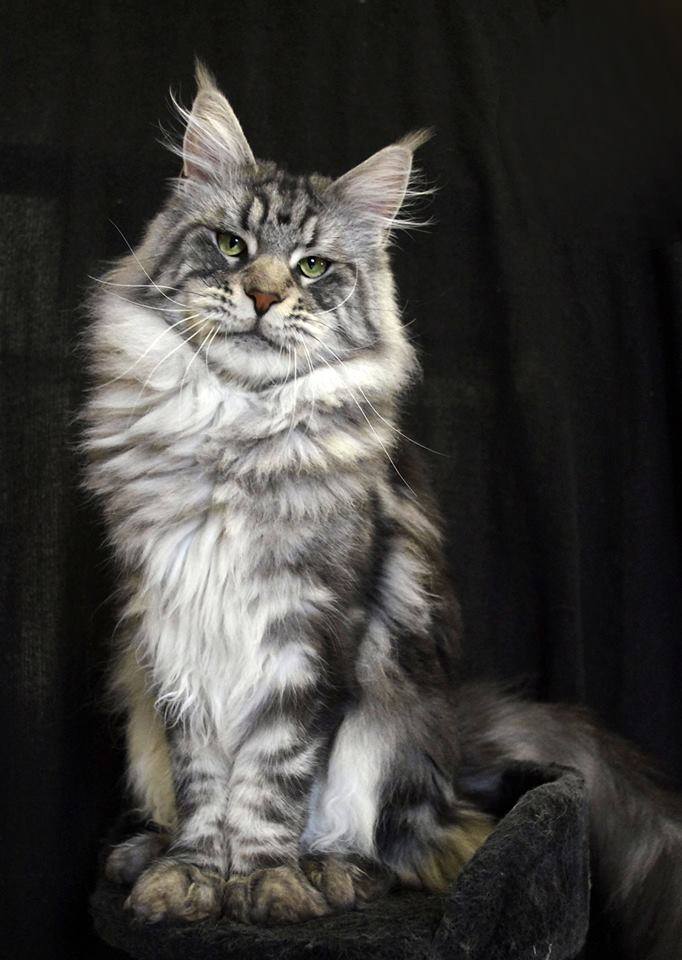
The Maine Coon is the largest commonly kept domestic cat breed and one of the oldest natural breeds in North America, recognized by the Cat Fanciers' Association (CFA) since the breed achieved championship status in 1976. This guide covers what the CFA and veterinary sources say about Maine Coon temperament and care, the heart condition the breed is specifically known to be predisposed to, and what a Maine Coon realistically costs to buy and keep in the U.S.
Veterinary disclaimer. This article is general, informational content. It doesn't diagnose your pet's condition and doesn't replace an in-person veterinary exam. See the full Veterinary Disclaimer.
Quick Facts
| Trait | Typical range |
|---|---|
| Recognized by | Cat Fanciers' Association (CFA); also recognized by other major cat registries |
| Weight | Males often 15–25 lbs; females typically 10–14 lbs |
| Life expectancy | Around 12–15 years (some sources cite up to 13 as a typical average) |
| Coat | Long, shaggy, water-resistant double coat |
| Energy level | Moderate; playful but not high-strung |
| Time to full maturity | Up to 3 years — one of the slowest-maturing cat breeds |
| Grooming frequency | 2–3 brushings per week |
Sources: Cat Fanciers' Association, PetMD.
Temperament: What Maine Coons Are Actually Like
According to the Cat Fanciers' Association, the Maine Coon is often called the "gentle giant" of the cat fancy, and CFA breed information describes the temperament as sociable, loyal, and intelligent, with a fairly independent streak that still values regular interaction with its family. Rather than bonding intensely with one person, Maine Coons are commonly described as moving comfortably between family members, and as generally good with children and other pets — though, as with any large animal, their size means play with small children or small pets benefits from some supervision, more as a practical matter of size than temperament.
One distinctive, well-documented trait: Maine Coons are not big meowers. CFA and veterinary sources note they communicate more through chirps, trills, and chattering sounds than the loud meowing associated with some other breeds.
Exercise and Enrichment Needs
Maine Coons have moderate energy — playful and food-motivated enough to enjoy interactive games, but not a high-strung or constantly active breed. Based on veterinary-reviewed guidance, a reasonable routine includes:
- Two to three short (roughly 10–15 minute) active play sessions per day, using wand toys or fetch — many Maine Coons genuinely enjoy fetch, unusually for a cat
- Climbing opportunities — cat trees and shelving are a good fit given the breed's large size and its enjoyment of vertical space
- Puzzle feeders or foraging toys for mental stimulation
Because of their size and weight, keeping a Maine Coon active also plays a meaningful role in joint health (see hip dysplasia note below) and weight management.
Grooming Needs
The Maine Coon's signature feature is its thick, shaggy, semi-long double coat — longer around the ruff, britches, and tail, shorter over the shoulders. Based on veterinary grooming guidance:
- Brush 2–3 times per week to prevent matting and manage shedding; the breed is a heavy shedder given its coat volume
- Pay particular attention to friction points (behind the legs, under the arms) where mats form fastest
- Professional grooming may be needed occasionally for dogs — sorry, cats — with established mats, since a heavily matted long coat can be uncomfortable and, in severe cases, require sedation to remove safely
- Trim nails roughly every 4–6 weeks
Despite the coat's shaggy appearance, veterinary sources note the texture is relatively less prone to matting than some other longhaired breeds because of a lighter undercoat — but "less prone" is not "matting-proof," and regular brushing is still necessary.
Health Issues Maine Coons Can Be Prone To
Veterinary disclaimer: The following is general breed-level health information based on veterinary sources, not a diagnosis. It does not mean an individual cat will develop these conditions, and any concern about a specific cat's health should go to a licensed veterinarian, not to this article.
The most clinically significant condition associated with this breed is one specific heart disease:
- Hypertrophic cardiomyopathy (HCM): According to North Carolina State University College of Veterinary Medicine's genetics program, HCM is a common heart disease in Maine Coons, typically appearing after age 3 (though some cats develop it later, around 6–8 years). NC State's program has identified a specific genetic mutation (in the MYBPC3 gene) associated with the disease in this breed, but the condition shows what geneticists call incomplete penetrance — meaning some cats carrying the mutation never develop clinical disease, while some cats without the identified mutation can still develop HCM through other causes. HCM involves thickening of the heart muscle that can reduce cardiac output and, in serious cases, lead to blood clot formation or congestive heart failure. Genetic testing (via cheek swab or blood sample) is available specifically for this mutation, and cats that test positive are generally recommended to have regular veterinary cardiac monitoring, including periodic echocardiograms, per NC State's guidance — but a genetic test result is not itself a diagnosis, and only a veterinarian (often with cardiology involvement) can assess an individual cat's heart health.
- Hip dysplasia: Somewhat unusual for a cat breed, but veterinary sources note it as a recognized concern in the Maine Coon, related to the breed's large size and bone structure.
- Spinal muscular atrophy (SMA): An inherited neuromuscular condition reported specifically in the Maine Coon breed by veterinary genetic sources; DNA testing for the causative mutation is available to breeders.
- Polycystic kidney disease and chronic gingivitis are also referenced in veterinary breed-health overviews as conditions to be aware of.
Practical implications for a prospective owner: ask breeders whether the parents have been tested for the MYBPC3 HCM mutation and screened for SMA, and understand that a cat testing negative for the known mutation is not automatically guaranteed to be free of HCM, since not all cases are linked to that specific gene. Routine veterinary checkups, including periodic heart auscultation, are a reasonable part of ongoing care for this breed specifically because of its known cardiac risk profile.
How Much Does a Maine Coon Cost? (U.S. Estimates)
Note on prices: Figures below are U.S. estimates for general planning. Prices and availability can change and vary substantially by breeder, pedigree, coat color, and region — treat these as ranges, not quotes.
Purchase or adoption
Maine Coon kittens from breeders are commonly reported in U.S. pricing guides in a wide range — roughly $800 to $5,000 — with show-quality kittens, rare colors, and health-tested (HCM/SMA-screened) lines typically at the higher end. Because purebred Maine Coons are less commonly found in general shelters than mixed-breed cats, breed-specific rescues are usually the most realistic lower-cost adoption route, when available.
First-year and ongoing costs
Given the Maine Coon's large size, food costs run higher than for an average domestic cat. General U.S. cat-ownership cost research (not breed-specific) cites an ongoing annual range of roughly $710 to $2,865 (about $60–$240/month), covering food, litter, and routine veterinary visits; a Maine Coon's larger appetite and the value of periodic cardiac screening given the breed's HCM risk are reasons to plan toward the middle-to-higher end of that range rather than the minimum.
Pet insurance
Average U.S. accident-and-illness pet insurance premiums for cats are commonly reported around $36 per month, according to ASPCA Pet Insurance and Forbes Advisor's cost reporting — notably lower than the average for dogs, though a breed with a documented cardiac predisposition is a reasonable one to evaluate insurance for specifically, since cardiac diagnostics (echocardiograms) and treatment can be a significant expense if HCM develops.
Cost summary table
| Cost category | Typical U.S. range (estimate) |
|---|---|
| Purchase price (breeder) | ~$800–$5,000 |
| Adoption fee (breed rescue, when available) | Typically lower than breeder price; varies by organization |
| Ongoing annual cost | ~$710–$2,865 |
| Pet insurance (monthly, average) | ~$36/month |
| HCM genetic screening (informational, per cat) | Reported by veterinary genetics labs in the range of roughly $35–$45 per test |
Prices and availability can change. These are U.S. estimates intended for planning, not fixed prices.
Is a Maine Coon Right for You?
A Maine Coon tends to suit a household that wants a large, sociable, dog-like cat that enjoys being around people without demanding constant attention, can commit to regular brushing for a long coat, and is comfortable with the ongoing awareness (and possible cost) of a breed-specific cardiac risk. It's a weaker fit for someone who wants a low-shedding cat, a very compact indoor footprint (Maine Coons are large and benefit from vertical space), or who isn't prepared for the idea of breed-specific veterinary screening.
Frequently Asked Questions
Do Maine Coons really get along with dogs? Veterinary and breed-club sources commonly describe Maine Coons as sociable and adaptable with other pets, including dogs, when introductions are handled gradually — though individual personality always plays a role, and there's no guarantee for any specific cat and dog pairing.
Is hypertrophic cardiomyopathy fatal in Maine Coons? HCM can range from mild and never clinically significant to severe and life-threatening, and outcomes vary by individual cat. This is a question about disease severity and prognosis in a specific animal, which only a veterinarian (ideally with cardiology experience) who has examined that cat can address — this article can only describe the condition in general, breed-level terms.
How big do Maine Coons actually get? Males commonly reach roughly 15–25 lbs, with some individuals larger, and it can take up to three years for a Maine Coon to reach full physical maturity — one of the slowest maturation timelines of any cat breed.
Are Maine Coons hypoallergenic? No. Like all cats, Maine Coons produce the Fel d 1 protein commonly associated with cat allergies, and their long, heavy coat means more shed hair and dander in the environment, not less — this breed is not a good default choice for someone specifically seeking a low-allergen cat.
Sources
- Cat Fanciers' Association — Maine Coon Cat
- PetMD — Maine Coon Cat Breed Health and Care
- ASPCA Pet Insurance — How Much Does It Cost to Have a Cat?
- Forbes Advisor — Average Cost of Pet Insurance
Sources verified during editorial review, September 2026.