"Poodle" isn't one dog — it's three official sizes sharing a breed standard, a reputation for being unusually easy to train, and a genetic bottleneck from decades of popularity that makes a handful of health conditions worth understanding before you buy. This guide covers temperament, the real differences between Toy, Miniature, and Standard, what each tends to cost, and the conditions veterinary literature flags most often in the breed.
Temperament
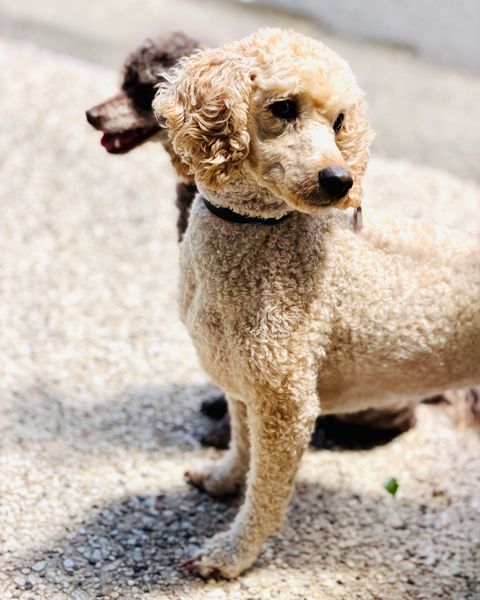
Poodles are consistently ranked among the most trainable dog breeds — the canine-cognition researcher Stanley Coren placed them second of all breeds for "working and obedience intelligence," and that reputation holds up in how quickly most Poodles pick up commands, tricks, and routines. They're active, alert, and generally very sociable, and they tend to bond closely with their people rather than treating the whole household as interchangeable.
That intelligence cuts both ways: an under-stimulated Poodle, especially a Standard, gets bored and can become anxious, vocal, or destructive. Sensitivity is a real trait too — many Poodles respond poorly to harsh training methods and do best with consistent, reward-based approaches. Coat color and size don't change temperament much, but size does change energy management in practice: a Toy or Miniature's exercise needs fit into a smaller living space more easily than a Standard's do, even though all three sizes are equally intelligent and equally capable of picking up bad habits from boredom.
History and the Three Sizes
Cynologists generally trace the Poodle's origins to Germany, as a water retrieving dog — the name likely comes from the German "pudeln" ("to splash") — though the breed's modern development and its distinctive clip owe a great deal to France, where it became a national symbol and where smaller varieties were bred down from the original retrieving dogs, partly for companionship and partly as circus and performance dogs. The breed's popularity in the U.S. took off after a Poodle won Best in Show at Westminster in 1935, and Poodles went on to be the AKC's most-registered breed for over 20 consecutive years in the mid-20th century, and the breed remained popular enough to rank #6 overall in the AKC's 2025 rankings, just outside the top five.
The AKC recognizes three sizes under one breed: the Standard Poodle (over 15 inches at the shoulder), the Miniature Poodle (10 to 15 inches), and the Toy Poodle (10 inches and under). All three share the same standard, temperament traits, and — mostly — the same health predispositions, though smaller Poodles carry different orthopedic risks (patellar luxation is more common in Toys and Minis, while hip dysplasia is more of a Standard-size concern) and tend to live longer on average than the Standard.
Quick Specs (Standard Poodle)
| Trait | Standard Poodle | Miniature / Toy |
|---|---|---|
| Height | Over 15 in at the shoulder | Miniature 10–15 in · Toy 10 in and under |
| Weight | Roughly 45–70 lb | Miniature ~10–15 lb · Toy ~4–6 lb |
| Life expectancy | 10–13 years (smaller varieties often longer, into the high teens) | Often 14–18 years |
| AKC group | Non-Sporting Group | Miniature: Non-Sporting · Toy: Toy Group |
| Energy level | High | Moderate–high, in a smaller footprint |
| Coat & shedding | Curly, low-shedding; professional clipping every 4–6 weeks | Same coat type and grooming schedule |
| Apartment fit | Workable with daily exercise | Good, especially Toy |
| Approx. purchase price (US) | ~$1,000–$2,500 from a health-tested breeder | Often similar or somewhat higher for Toy |
Health and Lifespan
The conditions below describe breed-level risk, not a diagnosis. Only a veterinarian examining a specific dog — often alongside bloodwork, imaging, or genetic testing — can determine whether any of this applies to your Poodle. See our veterinary disclaimer for more on the limits of general breed information.
Poodles, and Standard Poodles in particular, carry a well-documented genetic bottleneck from a mid-20th-century popularity boom that concentrated the breed's gene pool. Addison's disease — a hormonal disorder in which the adrenal glands don't produce enough cortisol and aldosterone, requiring lifelong medication once diagnosed — is the clearest example: veterinary researchers who have studied the breed's genetics estimate that Addison's disease affects roughly 8–10% of Standard Poodles, a rate dramatically higher than in dogs generally. A 2017 genome-wide study of 133 Standard Poodles (61 affected, 72 unaffected) didn't pin down a single causal gene, concluding the disease likely has a complex, multi-gene inheritance pattern — which means no current breeding strategy can guarantee puppies free of the risk, only breeders who are aware of it and screening thoughtfully.
Sebaceous adenitis, an immune-mediated skin disease that damages the oil-producing glands and can cause dry, flaking, sometimes odorous skin, is another condition strongly associated with Standard Poodles specifically, with published prevalence estimates around 2.7% of the breed. Epilepsy and hypothyroidism are also seen more often in Poodles than in the general dog population, and progressive retinal atrophy — a hereditary, incurable cause of gradual vision loss — has a DNA test available and is one of the screenings a responsible breeder should be able to show you documentation for.
Hip dysplasia is a real concern mainly in Standard Poodles, given their larger size; Miniature and Toy Poodles are more prone to patellar luxation (a kneecap that slips out of place) than to hip problems. Across all three sizes, dental crowding in Toy and Miniature mouths and progressive dental disease are common enough that regular dental care is worth budgeting for from puppyhood. None of this is unique to Poodles in kind — most breeds carry some predisposition profile — but the sheer number of conditions the Poodle Health Registry tracks (over 50) reflects genuinely how concentrated the breed's gene pool became, and is a good reason to ask any breeder specifically about Addison's and sebaceous adenitis testing in the parents, not just hips and eyes.
Cost of a Poodle
Purchase price is less driven by size than you might expect. Standard Poodles from a health-tested breeder in the U.S. often run around $1,000 on average, with a broader market range from roughly $400 to $2,500-plus depending on lineage, coat color, and breeder reputation — Toy and Miniature puppies can land in a similar or somewhat higher range depending on demand. Ongoing costs run roughly $2,200–$8,000 a year for a Standard depending on food, insurance, and — the biggest recurring line item for this breed — professional grooming, which most owners budget $50–$100 a month for on a 4-to-6-week clipping schedule since the coat doesn't shed out on its own the way most dogs' coats do.
Because Addison's disease requires lifelong medication once diagnosed, and because it's a condition breed-specific insurance underwriting sometimes treats differently, it's worth reading our guide to how pet insurance handles breed-linked genetic conditions and our general primer on how pet insurance works before you insure a Poodle puppy, ideally before any symptoms could be treated as a pre-existing condition.
Grooming and Exercise Needs
Grooming is the defining daily-life fact about owning a Poodle. The curly, continuously-growing coat doesn't shed the way most dogs' coats do, which is why the breed is often described (imperfectly — no dog is fully "hypoallergenic") as lower-shedding and more tolerable for some people with mild allergies. That same coat mats quickly without regular brushing (several times a week at minimum) and needs professional clipping roughly every 4 to 6 weeks — skipping this isn't just cosmetic, since a badly matted coat can trap moisture against the skin and contribute to infections.
Exercise needs scale with size but not with intelligence: a Standard Poodle needs a genuine 45–60 minutes of activity a day, while a Toy or Miniature can often get adequate exercise from a couple of shorter walks and indoor play — but all three sizes need daily mental stimulation (training, puzzle toys, or dog sports like agility, which Poodles tend to excel at) to avoid the anxiety and destructiveness that comes with an under-stimulated, high-intelligence dog.
A Word on Poodle Mixes
A large share of the market touched by Poodle genetics today isn't purebred Poodles at all — it's "doodle" crosses like Labradoodles and Goldendoodles, bred in large part for the Poodle's low-shedding coat and easy trainability. It's worth knowing, before you go looking for one instead of a purebred Poodle, that a first-generation cross doesn't inherit coat type, shedding level, size, or temperament in a predictable, guaranteed way the way a purebred litter does — some doodle puppies from the same litter shed noticeably more than others, and "hypoallergenic" is a marketing claim rather than a guarantee for any dog, purebred or mixed. None of that makes doodles a bad choice, but it does mean a purebred Poodle from a health-tested breeder is a more predictable option if a specific coat type or the breed's documented health-testing protocols (Addison's and sebaceous adenitis screening in particular) matter to your decision.
Is a Poodle Right for You?
A Poodle of any size tends to suit owners who want a highly trainable, people-oriented dog and are prepared for a real, recurring grooming budget and schedule — this isn't a wash-and-go coat. Standard Poodles need meaningfully more space and exercise than the smaller varieties; Toy and Miniature Poodles are a common choice for apartment living and for owners prioritizing a smaller, lower-shedding dog, provided their dental and orthopedic needs get routine attention.
If you're comparing working or herding breeds against a Poodle's trainability, our German Shepherd breed guide covers a very different exercise and temperament profile, and our Beagle breed guide covers a lower-grooming, scent-driven alternative at a similar size to a Miniature or small Standard. Whichever breed you land on, our guide to choosing a reputable dog breeder covers the health-testing questions — including Addison's and sebaceous adenitis screening for Poodles specifically — worth asking before you commit to a puppy.
Sources
- Poodle Club of America — AKC Breed Standard
- American Kennel Club — Poodle (Standard) breed page
- American Kennel Club — List of Breeds by Group
- American Kennel Club — Most Popular Dog Breeds of 2025
- Purina Pro Club — Addison's Disease in Standard Poodles (citing genome-wide association research, Mammalian Genome, 2017)
- "The effect of genetic bottlenecks and inbreeding on the incidence of two major autoimmune diseases in standard poodles, sebaceous adenitis and Addison's disease" — PubMed
- Wikipedia — Poodle (size standards and history overview, cross-checked against AKC and Poodle Club of America sources)
- Dogster — How Much Does It Cost to Own a Poodle?
Sources verified during editorial review, September 2026. Prices and availability can change.