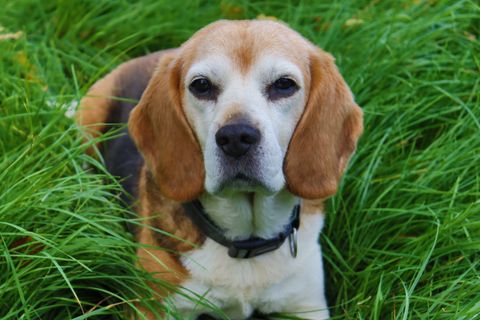
Beagles — the AKC's 7th most popular breed as of its 2025 registration rankings — are one of the most popular small-to-medium breeds in the U.S. for good reason: they're friendly, sturdy, good with kids, and don't need a mansion to be happy. Their two defining challenges are almost the opposite of a German Shepherd's: not too much drive, but a nose-driven independence that makes recall tricky, and a genuine tendency to overeat. Here's what the breed is actually like, the health issues worth watching for, and what one costs to buy and keep.
Temperament
The AKC describes the Beagle as "happy-go-lucky, funny," and notes their friendly, even-tempered nature makes them poor guard dogs but excellent companions — they were bred to hunt in packs, which shows up today as a strong preference for company, whether human or canine, and a general lack of aggression toward strangers or other animals. Beagles are amiable with children and tend to do well in multi-pet households.
The trade-off for that friendliness is a nose that runs the show. Beagles were bred to track scent independently, at a distance from their handler, and that instinct doesn't disappear indoors — a Beagle that catches an interesting scent on a walk can become suddenly, completely deaf to recall. This makes secure fencing and a leash non-negotiable in unfenced areas, and it's worth building recall training around high-value rewards from puppyhood rather than assuming the breed will simply "grow out of it." Beagles are also famously vocal, with a distinctive bay used for tracking that some owners find charming and neighbors sometimes don't.
History and Origin
The modern Beagle was developed in England in the 1830s, when Reverend Phillip Honeywood established a foundational hunting pack in Essex, believed to draw on North Country Beagles and Southern Hounds with possible Harrier ancestry — hound-type dogs used for hunting rabbits and hares trace back much further, to strains reportedly brought to Britain by William the Conqueror in the 11th century, but the breed as we'd recognize it today is a 19th-century refinement built for pack hunting on foot. Because Beagles were worked in packs rather than as solitary hunting companions, sociability toward other dogs was selected for directly — a big part of why the breed is generally so easygoing around other animals today.
Two Sizes, One Standard
Unlike the Poodle's three distinct AKC breeds-within-a-breed, the Beagle is a single breed split into two show varieties based on height alone: the "13-inch" variety for hounds up to 13 inches, and the "15-inch" variety for hounds over 13 inches but not exceeding 15 — the AKC standard disqualifies any hound measuring taller than 15 inches. Weight isn't part of the official standard at all; the two varieties are meant to be smaller and larger proportionate versions of the same dog, and neither is preferred over the other in the show ring. In practice, most pet Beagles fall into a range that would qualify as the 15-inch variety, and the practical difference for a pet owner is mostly about how much dog you're managing on a leash and how much food a portioned diet should include, rather than any temperament difference between the two.
Quick Specs
| Trait | Beagle |
|---|---|
| Height | 13–16 in at the shoulder |
| Weight | Males ~22–25 lb · Females ~20–23 lb |
| Life expectancy | Roughly 11–13 years |
| AKC group | Hound Group |
| Energy level | Moderate–high; scent-driven, needs a securely fenced area or leash |
| Coat & shedding | Short double coat, moderate year-round shedding; weekly brushing |
| Apartment fit | Workable, but the bay/howl can be an issue with close neighbors |
| Approx. purchase price (US) | $1,000–$2,000 from a health-tested breeder |
Health and Lifespan
This section describes breed-level tendencies, not a diagnosis for any individual dog. A veterinarian examining your specific Beagle is the only reliable way to know whether any of the below applies. See our veterinary disclaimer for more on what general breed information can and can't tell you.
Beagles are, on balance, a relatively healthy, sturdily-built breed — hip dysplasia, for instance, is rarely considered a significant problem in the breed, unlike in many similarly-sized dogs. The conditions worth being aware of are more metabolic and neurological than orthopedic.
Epilepsy is one of the better-documented concerns: Beagles are among the breeds veterinary sources flag as prone to idiopathic (genetic, cause-unknown) epilepsy, which typically appears as recurring seizures starting in early adulthood and is usually managed, not cured, with lifelong anti-seizure medication. Hypothyroidism — an underactive thyroid that can cause weight gain, lethargy, and coat changes — also occurs in the breed at a meaningfully elevated rate and is straightforward to test for and manage with daily medication once diagnosed.
Obesity is the single most common health issue in real-world Beagles, and it isn't subtle: this is a breed that, by both reputation and veterinary observation, "will eat whenever food is available," and its stocky, food-motivated nature combined with modest exercise needs makes overfeeding easy. Because obesity in dogs is linked to a wide range of downstream problems — joint stress, diabetes risk, shortened lifespan — portioned meals and resisting a very persuasive begging routine matter more for a Beagle's long-term health than for many other breeds. Beagles are also prone to ear infections, a consequence of their long, floppy, poorly-ventilated ears, and to a handful of inherited eye conditions, both of which are worth mentioning to your vet at routine checkups rather than waiting for a problem to become obvious.
Cost of a Beagle
A Beagle puppy from a reputable, health-tested breeder in the U.S. typically runs $1,000–$1,500, with AKC-registered breeders sometimes charging up to around $2,000; adoption from a shelter or breed-specific rescue is considerably cheaper and worth considering given how common Beagles and Beagle mixes are in U.S. shelters, often as a result of owners underestimating the breed's exercise and containment needs rather than any behavioral problem with the dogs themselves. Annual ongoing costs — food, routine vet care, preventatives, grooming supplies — tend to run roughly $1,700–$3,900 in the U.S., putting total lifetime cost over a typical 10-to-15-year lifespan somewhere in the neighborhood of $12,000–$14,000, excluding any major unplanned veterinary expenses.
Given how central weight management is to this breed's long-term health, our guide on how much you should actually feed your dog and our broader cost-of-owning-a-dog guide are both worth reading before you bring a Beagle puppy home.
Grooming and Exercise Needs
Grooming is genuinely low-maintenance: the Beagle's short, dense double coat needs only weekly brushing to manage shedding, with no professional clipping required. Ear checks are the one grooming task worth taking seriously and doing often — a weekly look, and a gentle wipe with a vet-approved ear cleaner when needed — since those long, floppy ears trap moisture and debris against the ear canal and are a genuinely common site of infection in this breed specifically, more so than in dogs with upright ears. Routine nail trims and the same dental care any dog needs round out the grooming list; none of it requires professional help unless a specific problem comes up.
Exercise needs are moderate but non-negotiable given the obesity risk above — a daily walk plus some off-lead scent games (in a secure, fenced area, given the recall caveat) will do more for a Beagle's waistline and behavior than either under- or over-exercising. Mental stimulation matters as much as physical exercise for this breed: scent work, puzzle feeders, and nose-based games tap into what the breed was actually built to do and tend to reduce the digging, howling, and counter-surfing that an understimulated Beagle can turn to instead.
Training a Beagle
Beagles are smart, but "trainable" and "eager to please" aren't quite the same trait, and this breed makes the distinction obvious. A Beagle will happily work for food — which makes treat-based, positive-reinforcement training genuinely effective — but its motivation to follow a scent or investigate something interesting will frequently outrank its motivation to listen, especially outdoors. That's not stubbornness so much as a different set of priorities than, say, a working breed bred to take direction from a handler at a distance. Short, frequent, high-reward training sessions tend to work better than long ones, and reliable off-leash recall is a genuinely unrealistic goal for most Beagles in unenclosed spaces, regardless of training quality — planning around secure fencing rather than trying to train the nose away is usually the more realistic approach.
Is a Beagle Right for You?
Beagles suit households that want a friendly, sturdy, kid-compatible dog without the grooming demands of a Poodle or the intense drive of a working breed like a German Shepherd, provided you're prepared for a genuinely stubborn nose, a vocal streak, and active portion control at every meal. They're a solid fit for houses with secure yards more than off-leash-heavy lifestyles, given how quickly a good scent can override recall training. They also tend to do well as a second dog in a household that already has a canine companion, since the breed's pack history means most Beagles are happier with company than as the sole pet.
If low-shedding, low-grooming coats matter more to you than scent drive, our Poodle breed guide covers a very different grooming commitment at a comparable size range. If you want a dog built for a job and structured daily exercise, our German Shepherd breed guide is worth reading alongside this one, and our French Bulldog breed guide covers a lower-energy small-breed alternative. If you already have one dog and are weighing whether a Beagle would make a good second, our guide to whether you should get a second dog is worth reading first. Whichever breed you choose, our guide to choosing a reputable dog breeder covers the health-testing questions worth asking before you put down a deposit.
Sources
- American Kennel Club — Beagle breed page
- American Kennel Club — List of Breeds by Group
- American Kennel Club — Most Popular Dog Breeds of 2025
- National Beagle Club of America — AKC breed standard (13-inch / 15-inch size varieties)
- Wikipedia — Beagle (history, size standards, and health-issue overview, cross-checked against AKC)
- Insurify — Cost of Owning a Beagle
Sources verified during editorial review, September 2026. Prices and availability can change.