Every dog and cat breed carries some inherited disease risk — but the size of that risk, and how insurers actually treat it, varies enormously by breed and by policy. This isn't a general explainer of how pet insurance works — see our guides to how pet insurance actually works and whether pet insurance is worth it for that. This article is narrower: what "genetic condition" means for underwriting purposes, how that differs from a pre-existing condition, and what the documented predisposition profile looks like for ten commonly owned breeds.
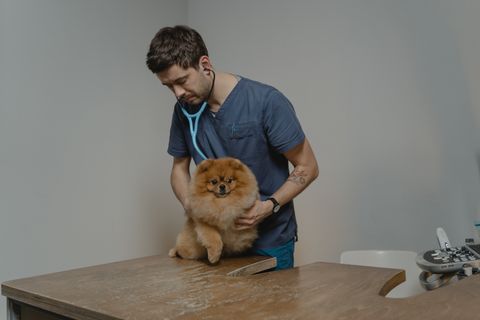
This article describes breed-level statistical risk, not a diagnosis for any individual pet. A breed predisposition is not a guarantee a specific animal will develop a condition, and it isn't a substitute for a veterinarian's evaluation of your own pet. See our veterinary disclaimer for more on what general breed-health information can and can't tell you.
Genetic Conditions Are Not the Same as Pre-Existing Conditions
This is the single most important — and most commonly misunderstood — distinction in this topic. A pre-existing condition, in nearly every U.S. policy, is one your pet already showed signs of, was diagnosed with, or was treated for before coverage started (or before a waiting period ended). A genetic or hereditary predisposition is different: it's a statistical tendency toward a condition based on breed, not a condition your pet currently has.
Both Embrace and Trupanion — two major U.S. pet insurers — publish their own policy language on exactly this point, and both draw the same basic line. Embrace states plainly: "Embrace covers hereditary and congenital conditions on our policies with no per-incident or per-condition limits at no added cost," with the key qualifier that coverage applies "as long as your pet hasn't been diagnosed or shown symptoms prior to the start of coverage." Trupanion's own FAQ makes the identical distinction: hereditary and congenital conditions are covered as a standard policy feature, but "there must be no pre-existing signs or symptoms of these conditions before the policy's effective date." In other words, a Golden Retriever's elevated hip dysplasia risk isn't itself excludable — a diagnosed case of hip dysplasia in that specific dog, discovered before the policy started, generally is.
Trupanion's own materials add a genuinely useful caveat, though: not every insurer handles this the same way. The company explicitly contrasts its approach with competitors that "exclude all hereditary conditions" or "exclude all congenital conditions" outright, or that impose longer waiting periods or lifetime payout caps specifically for these categories. That's the practical takeaway — coverage of genetic and congenital conditions is common but not universal, and it's a specific question worth asking (or reading the policy wording for) before buying, not something to assume applies equally across every provider.
Why Timing Matters More for High-Risk Breeds
Because the deciding factor is whether symptoms existed before enrollment, not whether the breed is predisposed, timing becomes the biggest lever an owner actually controls. A puppy or kitten insured before any symptoms appear can have a breed-linked condition covered later if underwriting terms allow it; the same dog insured only after a vet has already noted early signs of, say, hip laxity will very likely see that specific condition (and sometimes the paired joint, under a "bilateral exclusion") excluded going forward. This is why insurers and comparison guides consistently frame early enrollment as the single biggest lever for a breed with known predispositions — not because the predisposition itself is uninsurable, but because waiting increases the odds a symptom shows up first.
Documented Predispositions by Breed
The conditions below are drawn from veterinary and breed-club sources cited in TrundlePaw's individual breed guides, not re-researched from scratch here — see each guide for the full citation trail and additional context.
| Breed | Best-documented genetic risk | Reported prevalence |
|---|---|---|
| German Shepherd | Hip & elbow dysplasia; degenerative myelopathy (SOD1 mutation) | ~18.9% hip / ~17.8% elbow dysplasia in OFA-evaluated dogs; ~16% homozygous for the DM mutation in one UK sample |
| Golden Retriever | Hip dysplasia; hemangiosarcoma and lymphoma | ~20% hip dysplasia per OFA; ~11% per GRCA's own owner survey — estimates vary by sample |
| Labrador Retriever | Hip/elbow dysplasia; exercise-induced collapse (DNM1 mutation) | Among the most-screened breeds for hip/elbow scoring; EIC is autosomal recessive, one of the breeds most affected per OFA |
| French Bulldog | Brachycephalic obstructive airway syndrome (BOAS) | Well-documented, not rare, per VCA and University of Florida veterinary sources |
| Poodle (Standard) | Addison's disease; sebaceous adenitis | Roughly 8–10% for Addison's; ~2.7% for sebaceous adenitis, per published breed-genetics research |
| Beagle | Idiopathic epilepsy; hypothyroidism | Elevated relative to dogs generally; hip dysplasia notably not a significant concern in this breed |
| Maine Coon | Hypertrophic cardiomyopathy (MYBPC3 mutation) | Common in the breed per NC State's feline genetics program; incomplete penetrance (a positive test doesn't guarantee disease) |
| Ragdoll | Hypertrophic cardiomyopathy (a different MYBPC3 mutation than Maine Coon) | Common in the breed per NC State; onset often 1–2 years, sometimes later |
| Bengal | Hypertrophic cardiomyopathy; progressive retinal atrophy (PRA-b) | ~16.7% HCM prevalence in one screening study; no genetic test currently exists for the HCM mutation(s) |
| Siamese | Amyloidosis (progressive, currently untreatable) | 6.2% diagnosed in one referral-hospital study, vs. ~1.2% of cats overall in the same dataset |
What the Range Actually Tells You
A few patterns are worth pulling out of that table rather than treating each row in isolation. First, orthopedic risk (hip and elbow dysplasia) clusters heavily in larger dog breeds — German Shepherds, Golden Retrievers, and Labrador Retrievers all carry meaningfully elevated, well-documented rates, largely because these breeds are also the most heavily screened, giving researchers the largest datasets to measure from. Second, cats carry a strikingly concentrated cardiac risk: hypertrophic cardiomyopathy shows up as the single biggest documented concern across the Bengal and both major long-haired breeds, Maine Coon and Ragdoll — each tied to its own specific gene mutation, each with incomplete penetrance, meaning a genetic test result is informative but not a guarantee either way. Third, not every predisposition is orthopedic or cardiac: the Poodle's Addison's disease risk is hormonal, the Siamese's amyloidosis risk is a progressive protein-buildup disease with no cure, and French Bulldogs face an airway-structure problem tied directly to the flat-faced conformation the breed is bred for.
And fourth — worth stating plainly because it cuts against the framing of this whole article — not every breed carries an unusually elevated genetic burden. The Beagle is a useful counterexample: hip dysplasia, the single most commonly cited orthopedic concern across large dog breeds, is "rarely considered a significant problem" in Beagles specifically, per veterinary sources, and the breed's best-documented risks (epilepsy, hypothyroidism, obesity) are real but don't carry the same "budget for a five-figure surgery" weight that BOAS or hip dysplasia in a giant breed can. A relatively low-genetic-risk breed doesn't need the same insurance urgency as a breed with a well-documented, expensive, and common predisposition — the breed-specific risk profile is exactly what should inform that decision, not a blanket rule either way.
Practical Questions to Ask Before You Insure a High-Risk Breed
- Does the policy cover hereditary and congenital conditions by default, or as a paid add-on? As Trupanion's own materials note, this varies by insurer — don't assume every policy handles it the way Embrace or Trupanion describes their own coverage.
- What counts as a "bilateral exclusion" for paired-joint conditions? Relevant for orthopedic risk in breeds like German Shepherds, Golden Retrievers, and Labradors — if one hip or knee is treated before or during a waiting period, some insurers exclude the other side too.
- Is there a breed-specific waiting period or exclusion list? Some insurers apply longer waiting periods or specific carve-outs for breeds with well-known conditions rather than covering them under the same general terms as any other breed.
- How does the policy treat a genetic test result? If a breeder has already tested a puppy or kitten's parents (for the SOD1, MYBPC3, or DNM1 mutations referenced above, for example), ask the insurer directly whether that documentation affects underwriting — policies and practices vary, and this is worth confirming rather than assuming either way.
- When does coverage actually start relative to your pet's age? Given that timing, not the predisposition itself, is usually the deciding factor, enrolling a puppy or kitten before any symptoms of a known breed risk have appeared is the single most reliable way to keep that condition inside coverage rather than outside it.
None of this is a recommendation to buy a specific policy or insurer — TrundlePaw doesn't sell or receive commission on pet insurance, and coverage details change over time and by state. If a breed's documented risk profile above is part of your decision, read the specific policy's hereditary and congenital condition language directly from the insurer, and weigh it against the broader cost-benefit framework in our Is Pet Insurance Worth It? guide before buying.
Sources
- Embrace Pet Insurance — Genetic & Breed-Specific Condition Coverage
- Trupanion — Are Hereditary & Congenital Conditions Covered? (FAQ)
- Oberbauer, Keller & Famula (2017), "Long-term genetic selection reduced prevalence of hip and elbow dysplasia in 60 dog breeds," PLOS ONE
- Orthopedic Foundation for Animals (OFA)
- Universities Federation for Animal Welfare (UFAW) — Siamese: Amyloidosis
- Additional breed-specific predisposition data and citations as detailed in TrundlePaw's individual breed guides linked throughout this article (German Shepherd, Poodle, Beagle, Bengal, Siamese, Golden Retriever, Labrador Retriever, French Bulldog, Maine Coon, and Ragdoll).
Sources verified during editorial review, September 2026. Insurance coverage terms and prices can change — always confirm current policy language directly with the insurer.